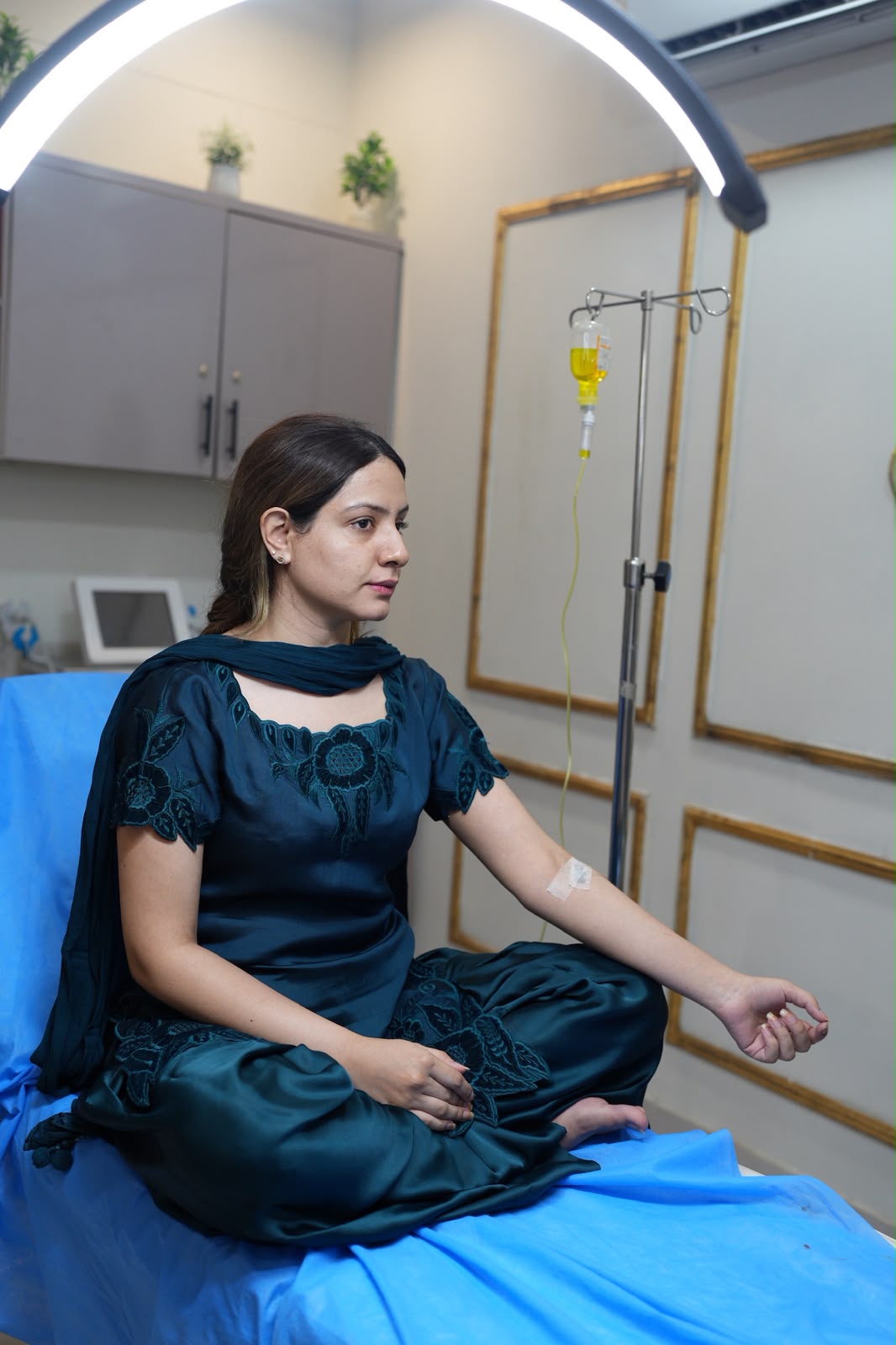
People looking for brighter, more even-looking skin often search for skin whitening drips clinic in Lahore. IV drips containing glutathione and other ingredients are marketed by some clinics for cosmetic skin lightening. However, because these treatments involve intravenous medication, they require proper medical assessment rather than being treated like an ordinary beauty procedure.
At Cosmothetics Clinic, people considering pigmentation or skin-brightening treatments can discuss their concerns with a qualified medical professional and explore options according to their individual skin condition and treatment goals.
It is important to understand what skin-whitening drips contain, what evidence exists, what risks may be involved, and whether an IV treatment is appropriate for you.
What Are Skin Whitening Drips?
Skin-whitening or skin-brightening drips generally refer to intravenous treatments marketed for improving skin tone or reducing the appearance of pigmentation. Glutathione is one of the ingredients commonly associated with these treatments.
Glutathione is naturally present in the body and has antioxidant functions. It has also been investigated for its potential effects on melanin production. However, evidence for intravenous glutathione specifically for cosmetic skin lightening remains limited, and long-term safety data are lacking.
Therefore, a responsible clinic should not present IV glutathione as a guaranteed whitening treatment or promise a particular change in skin color.
Skin Brightening vs. Skin Whitening
The terms “skin whitening” and “skin brightening” are often used interchangeably in cosmetic marketing, but they can create unrealistic expectations.
Dermatological treatment generally focuses on addressing concerns such as:
- Uneven pigmentation
- Post-inflammatory hyperpigmentation
- Sun-related pigmentation
- Melasma
- Dull-looking skin
- Uneven skin tone
The objective should be healthier-looking, more even skin rather than promising an artificial or permanent change in a person’s natural skin color.
A proper assessment can also determine whether pigmentation is caused by an underlying skin condition that requires a different treatment.
Why Medical Consultation Matters Before an IV Drip
An IV treatment enters the bloodstream, so it should be approached differently from topical skincare.
Before considering a skin whitening drip, a medical professional may need to review:
- Your medical history
- Current medications
- Allergies
- Existing medical conditions
- Previous reactions to injections or infusions
- Pregnancy or breastfeeding status where relevant
- The reason for your pigmentation
- Previous cosmetic treatments
- Your expectations
This assessment helps determine whether an IV treatment is appropriate or whether another approach would make more sense.
Glutathione and Skin Lightening: What Does the Evidence Say?
Glutathione has been studied as a possible skin-lightening agent because of its effects on oxidative processes and pathways involved in melanin production.
However, the evidence is not strong enough to support making broad promises about IV glutathione.
A systematic review published in 2024 found limited evidence for IV glutathione and noted significant concerns about efficacy and safety.
A 2026 review likewise concluded that available evidence for IV glutathione remains limited, with small studies, different treatment methods, limited follow-up, and unresolved safety questions. The authors stated that current evidence does not justify routine cosmetic use of IV glutathione for skin lightening.
This distinction is important for anyone searching for a skin whitening drips clinic in Lahore.
Important Safety Considerations for IV Glutathione
IV glutathione should not be treated as risk-free.
Published medical literature has reported concerns including allergic reactions and other adverse effects associated with intravenous administration. There is also insufficient evidence regarding long-term IV glutathione use specifically for cosmetic skin lightening.
More recently, the U.S. FDA reported adverse events associated with certain compounded IV glutathione products and warned compounders not to use dietary-supplement-grade glutathione as an ingredient for injectable drugs. Reported events included fever, chills, pain, dizziness, and serious illness associated with endotoxin exposure.
This does not mean that every IV glutathione product or every clinic has the same risk. It does mean that product quality, sourcing, preparation, medical oversight, and appropriate patient selection are important considerations.
What Should You Ask a Skin Whitening Drips Clinic?
If you are considering an IV drip, ask the clinic clear questions before treatment.
Ask About the Ingredients
Find out exactly what the drip contains rather than relying only on the term “whitening drip.”
Ask About Medical Supervision
IV treatment should have appropriate medical oversight.
Ask About Possible Side Effects
A responsible provider should explain potential risks rather than describing the treatment as completely risk-free.
Ask About Alternatives
Depending on your pigmentation, other approaches may be more appropriate.
Ask About Expected Results
Avoid clinics that promise a specific degree of whitening or guaranteed results.
Who May Be Looking for Skin Brightening Treatment?
People may seek professional advice for a range of pigmentation concerns, including:
- Uneven skin tone
- Sun-induced pigmentation
- Post-acne marks
- Melasma
- Dull-looking skin
- Hyperpigmentation
- Uneven complexion
However, the correct treatment depends on the cause.
For example, melasma can behave differently from post-inflammatory pigmentation, so simply choosing a “whitening drip” without diagnosing the underlying concern may not address the actual problem.
Skin Assessment Before Treatment
A professional skin assessment can help determine what is causing uneven pigmentation.
During consultation, the clinician may consider:
- Skin type
- Pigmentation pattern
- Duration of the concern
- Sun exposure
- Previous acne or inflammation
- Hormonal factors
- Current skincare products
- Previous treatments
- Medical history
This information can help create a more individualized treatment plan.
Alternatives to Skin Whitening Drips
A skin-brightening plan does not necessarily have to involve an IV drip.
Depending on the diagnosis, a dermatologist or qualified medical professional may consider options such as:
Medical Skincare
Topical treatments can sometimes help manage specific pigmentation concerns.
Chemical Peels
Certain professionally selected chemical peels may be used for appropriate pigmentation concerns.
Laser or Light-Based Treatments
Some pigmentation problems may respond to selected laser or light-based procedures, although treatment choice depends on skin type and diagnosis.
Microneedling
Microneedling may be considered for selected skin concerns and can sometimes be combined with other treatment approaches.
Sun Protection
Daily sun protection is an important part of managing many pigmentation concerns and helping prevent recurrence.
The right treatment depends on the person’s skin condition, rather than simply choosing the most heavily marketed procedure.
Why Sun Protection Matters
Sun exposure can contribute to pigmentation and can make some pigmentation disorders more difficult to manage.
A skin-brightening plan may therefore include:
- Broad-spectrum sunscreen
- Appropriate reapplication
- Protective clothing
- Avoiding excessive direct sun exposure
- Following the clinician’s skincare recommendations
Without appropriate sun protection, pigmentation may return or become more noticeable.
Choosing a Skin Whitening Drips Clinic in Lahore
When searching for a skin whitening drips clinic in Lahore, consider more than the advertised price or a social-media before-and-after photograph.
Look for a clinic that provides:
- Medical consultation
- Clear information about ingredients
- Appropriate patient assessment
- Proper infection-control practices
- Transparent discussion of risks
- Realistic expectations
- Individualized treatment planning
- Appropriate follow-up
You should also be able to ask questions about the treatment before deciding whether to proceed.
Why Consider Cosmothetics Clinic?
Cosmothetics Clinic is an aesthetic and dermatology-focused clinic in Lahore where patients can discuss skin concerns and explore professionally guided treatment options.
For someone interested in skin-brightening treatment, consultation can help determine whether an IV drip is appropriate or whether another approach better matches the underlying pigmentation concern.
The goal should be an individualized treatment plan rather than a one-size-fits-all procedure.
Patients should confirm the current availability of any specific IV formulation, ingredients, pricing, schedule, and medical supervision directly with the clinic before treatment.
Are Skin Whitening Drips Permanent?
Skin-brightening treatments should not be marketed as providing permanent whitening.
The appearance of pigmentation can change over time because of:
- Sun exposure
- Hormonal changes
- Skin inflammation
- Acne
- Certain medications
- Underlying pigmentation disorders
- Skincare habits
Even when improvement occurs, maintenance and appropriate skin care may be necessary.
The available evidence for IV glutathione does not establish a reliable long-term skin-lightening effect.
What Happens During an IV Drip?
An IV drip involves administration of fluid or medication through a vein using intravenous access.
Because this is an invasive medical procedure, appropriate clinical precautions should be followed.
The exact process depends on the formulation and clinical protocol. Patients should receive information about:
- The ingredients being administered.
- Why they are being recommended.
- Potential benefits and limitations.
- Possible adverse reactions.
- What to do if symptoms occur.
- Follow-up requirements.
Do not assume that a drip is safe simply because it is marketed as a cosmetic treatment.
What Are the Possible Risks?
Potential risks vary according to the ingredients and method of administration.
For IV glutathione, published literature has raised concerns including hypersensitivity or anaphylactic reactions, abnormal liver-function tests, infusion-related reactions, and other adverse effects.
There are also risks associated with IV administration itself, such as discomfort, bruising, infection, or reactions to the administered ingredients.
This is why proper medical assessment and product quality are important.
When Should You Avoid Self-Treatment?
Do not purchase injectable “whitening” products online and attempt to administer them yourself.
Injectable products require appropriate handling, sterile preparation, correct administration, and medical oversight.
The FDA’s August 2026 warning concerning certain compounded glutathione injections illustrates why the quality and source of injectable ingredients matter.
If you are considering treatment, discuss it with a qualified medical professional instead.
Frequently Asked Questions
1. What is a skin whitening drip?
A skin whitening drip generally refers to an IV treatment marketed for cosmetic skin lightening or brightening, often involving glutathione. Evidence for IV glutathione specifically for cosmetic skin lightening remains limited, and long-term safety data are insufficient.
2. Are skin whitening drips safe?
Safety depends on the ingredients, product quality, patient, administration method, and medical supervision. IV glutathione has documented safety concerns, so it should not be described as completely risk-free.
3. What is glutathione?
Glutathione is a naturally occurring antioxidant involved in cellular processes. It has also been investigated for potential effects on melanin production and skin pigmentation.
4. Do glutathione drips permanently whiten the skin?
There is not sufficient evidence to establish a permanent skin-whitening effect from IV glutathione. Pigmentation can also change due to sun exposure, hormones, inflammation, and other factors.
5. How many skin whitening drips are needed?
There is no universally established IV glutathione protocol for cosmetic skin lightening. Treatment frequency should not be assumed from advertisements or social-media claims. A qualified clinician should assess the individual situation.
6. Can everyone receive a skin whitening drip?
No. IV treatment may not be appropriate for everyone. A medical professional should review the person’s medical history, medications, allergies, and other relevant factors before treatment.
7. Can skin whitening drips treat pigmentation?
The answer depends on the cause of pigmentation. IV glutathione has limited evidence for cosmetic skin lightening, so a clinician may recommend other treatments depending on the diagnosis.
8. Are there alternatives to whitening drips?
Yes. Depending on the pigmentation problem, options may include topical skincare, chemical peels, selected laser or light treatments, microneedling, and sun protection.
9. Why is a consultation important before an IV drip?
A consultation can help identify the cause of pigmentation, review medical history, assess suitability, discuss risks, and determine whether an IV treatment is appropriate.
10. Are IV glutathione treatments risk-free?
No. Published evidence reports adverse effects associated with IV glutathione, including serious reactions in some circumstances.
11. Can I buy a whitening drip online?
Self-administering injectable products purchased online is not recommended. Injectable medicines require appropriate sourcing, preparation, storage, and professional administration.
12. Where can I discuss skin-brightening treatments in Lahore?
Cosmothetics Clinic provides aesthetic and dermatology-focused consultations in Lahore. Patients should contact the clinic to confirm current treatment availability, ingredients, medical supervision, and consultation arrangements.
13. Does sunscreen matter after pigmentation treatment?
Yes. Sun exposure can worsen or contribute to several pigmentation concerns. Appropriate sun protection is an important part of many pigmentation-management plans.
14. Does Cosmothetics Clinic guarantee skin whitening results?
No responsible medical treatment should promise guaranteed or permanent skin-whitening results. Individual outcomes vary, and the appropriate approach depends on the patient’s skin condition and treatment plan.
Leave a Reply